 Auto
Auto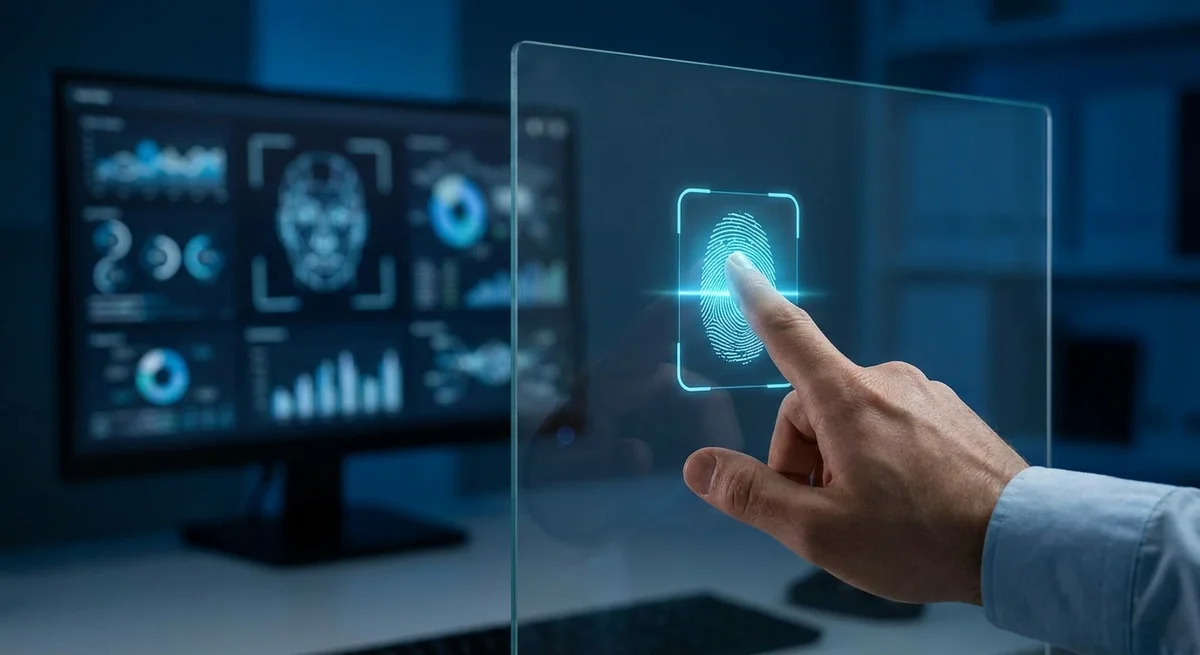
Exploring Biometric Technology: The Future of Secure Identification
In an age of ever-growing cybersecurity threats, biometric technology has emerged as a powerful solution for secure identification. Instead of relying on weak passwords or easily lost ID cards, biometric systems verify who you are by scanning unique physical or behavioral traits. Today, millions of people unlock devices with a fingerprint or face scan, and travelers pass through automated gates identified by their eyes or facial geometry. A recent FIDO Alliance survey found that biometrics (facial or fingerprint scans) are now consumers’ preferred and most trusted authentication methods (fidoalliance.org). In fact, industry reports project the global market for biometric systems to skyrocket – one forecast for banking alone predicts nearly $9 billion by 2026 as banks adopt fingerprint and facial scans for customer security (winepressnews.com). However, this rapid expansion also raises concerns about privacy, data security, and fairness. This article examines the main biometric methods (fingerprint, facial, iris, etc.), shows how they are used in sectors from banking to border control, and explores the ethical and privacy challenges posed by widespread biometric data use.
What Is Biometric Identification?
Biometric identification means using measurable body traits to confirm a person’s identity. These traits include physiological features like fingerprints, iris patterns, face geometry, or voice characteristics, as well as behavioral patterns (typing rhythm, gait, etc.). For example, a fingerprint reader scans the tiny ridge patterns on your fingertip, and a facial scanner captures distances between your eyes, nose, and mouth. Because these traits are unique to each person and (mostly) permanent, biometrics can be far more secure than passwords or PINs. Biometric data is typically converted into a digital template – a mathematical representation of the trait – which is then compared to a stored template to authenticate identity. Modern biometric systems often include anti-spoofing measures (like liveness detection) to ensure that a real person is present during the scan.
Types of Biometric Methods
Biometric technology encompasses a variety of methods. The most common modalities include:
- Fingerprint Recognition: Analyzes the unique ridge patterns on a person’s fingertip.
- Facial Recognition: Uses a camera (or depth sensor) to map the geometry of a person’s face.
- Iris/Retina Scanning: Captures the detailed pattern in the colored ring (iris) or retina of the eye, which are highly distinctive.
- Voice Recognition: Analyzes vocal tones and speaking patterns to identify a person.
- Palm and Vein Scanning: Scans palm lines or subcutaneous vein patterns in the hand or wrist.
- Behavioral Biometrics: Includes gait analysis (the way someone walks), typing dynamics, or other behavioral patterns.
Each method has its own strengths. Fingerprint recognition is very mature and widely used (in smartphones and government ID systems) because fingerprints are easy to capture and highly distinctive. Facial recognition is contactless and works at a distance, which makes it ideal for cameras at airports or on phones (like Apple’s Face ID). Iris and retina scans offer extremely high accuracy and are less prone to change over time, so they are used in high-security settings (some airports and offices use iris scanners as “e-gates”). Voice recognition is handy for phone banking or virtual assistants, while palm/vein scanners (such as Amazon One’s palm reader) can verify identity without physical contact by mapping vein patterns under the skin. In practice, systems may use multi-modal biometrics, combining two or more types (e.g. face+iris) to boost accuracy and spoof resistance.
Fingerprint Recognition
Fingerprint scanners capture the unique pattern of ridges and valleys on a fingertip. Since the mid-20th century, fingerprints have been used in law enforcement (FBI databases, etc.) as a reliable ID. Today, nearly every smartphone offers a fingerprint sensor, and many security doors and ATMs accept fingerprint verification. Fingerprints are relatively easy for users (just touch a pad) and hard to fake if liveness checks are used. However, severe burns or skin damage can prevent a successful scan. Importantly, fingerprint data is a powerful identifier – it cannot be “reset” if stolen (unlike a password). Indeed, in one high-profile breach, a criminal database leak exposed millions of actual fingerprint records (www.forbes.com). Experts warn that unlike passwords, “it cannot be changed. Once it’s compromised, it’s compromised (www.forbes.com).” This permanence makes protecting fingerprint biometric data especially critical.
Facial Recognition
Facial recognition uses cameras and algorithms to identify a person by their face. It measures features like eye distance, nose shape, and facial contours. Modern systems (often using AI) can work in bright sunlight or dim indoor light. Facial biometrics are already ubiquitous: they power phone unlocking (e.g. Face ID on iPhones), airport passport control, and even photo tagging on social media. Law enforcement agencies also use it for surveillance or identifying suspects (though often controversially). However, facial recognition raises significant concerns. Studies (such as one cited by Amnesty International) have repeatedly found that many face recognition systems misidentify Black and Asian faces far more often than white faces (amnesty.ca). For instance, one U.S. government study reported that African-American and Asian faces were up to 100 times more likely to be falsely matched or misidentified than white faces (amnesty.ca). This bias can lead to wrongful alerts, especially for women and people of color. Moreover, because our face is always exposed in public, people worry about being tracked without consent. In fact, some governments are moving to curtail unchecked face scans: the European Parliament has called for a ban on police use of public facial recognition (www.politico.eu), and new EU regulations would generally forbid biometric ID of people in public spaces except for combating serious crimes (www.politico.eu).
Iris and Retina Scanning
The iris (colored ring around the pupil) and the retina (blood vessel pattern at the back of the eye) both have complex, unique patterns. Iris scanning is contactless (often you just look at a camera) and highly accurate. It works even for identical twins and does not change significantly with age. For these reasons, some airports and border crossings use iris scans for passenger identification. For example, countries like the UAE and the United States have experimented with iris-gated e-Passport lanes. Samsung Galaxy phones once featured iris scanners for unlocking (though the feature is less common today). Despite its precision, iris scanning requires specialized cameras and can be sensitive to lighting or camera alignment. Retina scanning (reading the retina) is even more locked down due to privacy concerns — it’s rarely used outside high-security labs.
Other Biometric Methods
- Voice Recognition listens to speech patterns. Banks increasingly use voice as a password for phone banking: a spoken passphrase is checked against the user’s registered voiceprint. This is convenient and hands-free, but background noise or illness can affect accuracy.
- Palm and Vein Scans read patterns on the palm or veins under the skin. Amazon’s “One” system lets shoppers pay by palm-print – it scans vein patterns for security. These methods are hard to forge (subsurface veins are invisible) and still fairly contactless (you hover your hand).
- Behavioral Biometrics include gait (analyzing someone’s walk), typing rhythm, or even how a person swipes on a screen. These are emerging technologies that can continuously verify an identity in the background without requiring a conscious scan. For instance, if your phone learns your typing pattern, it can detect impostors. These are still less mature but may play a growing role in the future.
Applications of Biometric Identification
Biometrics is finding uses in many sectors, often where security and convenience are paramount:
-
Banking and Finance: Banks deploy biometrics to prevent fraud and simplify logins. Customers now use fingerprint or facial scans to authenticate mobile banking apps and ATM withdrawals (blog.hidglobal.com). These scans ensure that even if someone steals a card, they cannot use it without the owner’s finger or face. Some banks also use voice recognition to guide customers over the phone. By meeting strict ID requirements (KYC, AML regulations) with biometrics, banks can speed up onboarding and protect accounts. For example, an Argentinian bank uses fingerprint scans to authenticate retirees picking up pensions, dramatically reducing fraud (blog.hidglobal.com).
-
Border Control and Travel: Airports and immigration offices are among the biggest adopters of biometrics. Many countries issue e-passports with embedded chips that store the holder’s fingerprints or facial image. Automated border gates (e-gates) scan a traveler’s biometrics and compare them to passport records. In the European Union, a new Entry/Exit system now records fingerprints and face images for nearly all non-EU visitors (www.newstrail.com). U.S. Customs and Border Protection has deployed facial recognition cameras at airports to match travelers against passport photos (www.newstrail.com). These systems can quickly flag impostors (e.g. someone using a stolen passport) and streamline the check-in process for genuine travelers. In some airports like Singapore’s Changi, compliant travelers can pass through immigration in seconds just by scanning face and fingerprints linked to their digital ticket (www.newstrail.com). Overall, biometrics are making travel more frictionless (faster queues) but also more monitored (more data collected on each trip).
-
Law Enforcement and Government ID: Police routinely use fingerprint databases for criminal identification (e.g. FBI’s IAFIS in the U.S.). National governments also maintain voter rolls and ID systems based on biometrics. The world’s largest biometric program is India’s Aadhaar, which has enrolled over a billion residents with their fingerprints and iris scans (time.com). Aadhaar links these biometrics to a 12-digit ID number for banking, welfare, and taxes. While Aadhaar has helped reduce fraud in some social programs, it has also sparked intense privacy debates (the Indian Supreme Court limited its mandatory use to protect citizens’ privacy). Many other countries (like Pakistan, Nigeria, and parts of Africa) rolled out biometric ID cards to formalize identity. Healthcare is another area: some clinics use fingerprints to pull up patient records reliably. Even in workplaces, biometrics are used for time-and-attendance systems or to secure access to high-security areas (a lab or vault might only open for recognizable faces or voices).
-
Consumer Technology and Daily Life: Biometrics have become commonplace in consumer gadgets. Almost every new smartphone offers fingerprint unlock or facial unlock. Laptops and PCs can have built-in cameras that activate only when your face is recognized (Windows Hello, for example). Smart home devices (like door lock keypads) sometimes add retina or voice biometrics for extra security. Retail is experimenting with biometrics too: some grocery stores let you pay by palm scan rather than waiting at a register. In essence, whenever a fast check-in or check-out is possible with a scan of who you are, biometrics can play a role.
The adoption is broad: today’s security landscape treats biometric checks as a form of passwordless authentication – you simply are the key. According to one industry report, about 66% of smartphone owners are expected to use biometrics for at least some authentication in 2024 (www.daon.com), and nearly half of travelers now experience biometric screening at airports (www.daon.com). These trends show biometrics moving from futuristic to everyday in finance, travel, and beyond.
Ethical and Privacy Considerations
Widespread use of biometrics brings serious ethical and privacy concerns. Unlike passwords, biometric traits are deeply personal and immutable. If a database of fingerprints or face templates is breached, a person cannot simply “get a new background” – those traits are with them for life. Experts emphasize the gravity of this: “You can’t buy a new fingerprint… once your face information is stolen, it really can mess up your entire life,” warns a security researcher (www.techtarget.com). Indeed, real-world breaches have shown the stakes: a 2019 incident exposed millions of fingerprint and facial records in a publicly accessible database (www.forbes.com) (www.forbes.com). In that breach, customers of police and bank ID systems had their actual biometric data leaked – not just encrypted hashes. Such exposure is terrifying because it’s irreversible. As Forbes reported: “the issue with biometric data… is that, unlike usernames and passwords, it cannot be changed. Once it’s compromised, it’s compromised.” (www.forbes.com)
Privacy of personal data is another major issue. Biometric data is, by definition, personally identifiable information. Many people worry about how their fingerprints or face scans are stored and used. A 2023 industry survey by the Biometrics Institute found that 54% of experts consider privacy and data protection the biggest obstacle to biometric adoption (www.biometricsinstitute.org). In other words, insiders admit that public unease could slow down the spread of this technology. Moreover, the same survey noted that most people feel uninformed about how their data is handled – and that public education is sorely needed (www.biometricsinstitute.org). Without clear policies, users may be treated as “unaware subjects” in biometric databases, which raises ethical red flags.
Consent and control are key. Ideally, individuals should have the choice to opt in or out of biometric identity programs. For example, in India’s Aadhaar system, the Supreme Court eventually ruled that citizens cannot be forced (e.g. via mandatory linking for bank accounts or mobile service) to give or use their biometrics in all contexts (time.com). In many democracies, informed consent is increasingly required: laws like the EU’s GDPR categorize biometric data as a special category, meaning its collection needs explicit legal basis and consent. Some U.S. states (like Illinois and Texas) have passed laws regulating commercial biometric use, requiring notice and consent for collecting fingerprints or face scans.
Bias and fairness pose another ethical challenge. As noted above, facial recognition systems have demonstrably higher error rates for women and persons of color (amnesty.ca). This means minorities could face false accusations, extra delays, or exclusion. Biased biometric systems can exacerbate social inequities. An example: if an airport’s face scanner misreads darker-skinned travelers as different people, it could lead to wrongful harassment or detainment. Responsible deployment demands rigorous testing of biometric tools across diverse populations, and ongoing oversight to prevent discriminatory outcomes.
Surveillance and misuse of biometric ID is a top ethical concern. Governments or companies might be tempted to track people everywhere. Real-world instances show the risk: police forces around the world have used facial recognition cameras to scan crowds without individuals’ knowledge, sparking public outcry. This “function creep” – using biometrics beyond their original intent (e.g. face scans for payment turning into constant face surveillance) – is troubling. It pits security against civil liberties. In response, some policymakers have drawn lines. For instance, the European Parliament recently passed a non-binding resolution calling for a ban on real-time biometric ID in public by police, citing privacy and fundamental rights (www.politico.eu). If enforced, this would prohibit scanning faces or gait on the street for routine policing. Such measures reflect a growing consensus that biometric programs must include strict limits and transparency to protect privacy and human rights.
Finally, data security itself is a major challenge. Any system storing biometric templates becomes an attractive target for hackers. Companies and governments must use state-of-the-art encryption and security. Unlike a stolen password, if a fingerprint database is exposed, victims can’t reset the data. Therefore, experts argue that biometric templates should be stored in as de-identified or decentralized a manner as possible (for example, storing only hashed or encrypted features, or keeping templates only on the user’s device rather than a central server). Without such safeguards, a single breach could compound the damage far beyond traditional data leaks.
The Future of Biometric Identification
Biometric technology continues to evolve rapidly. In the coming years, we can expect one key trend to be multimodal and AI-driven biometrics. Systems will combine several traits at once (e.g. face + voice + gait) to improve accuracy and security. Artificial intelligence is also enhancing how biometric systems learn and adapt, potentially making recognition faster and more robust. Another frontier is behavioral biometrics: things like how you walk, how you type, even your heartbeat pattern. These could continuously verify identity in the background, rather than requiring an explicit scan.
Contactless and pervasive biometric sensors are likely to spread as well. During the COVID-19 era, demand grew for touchless ID – systems moved from fingerprint scanners to facial or iris scanners to reduce contact. In the future, surveillance cameras with built-in facial or gait analysis could become more common in public spaces (though this again raises privacy issues).
We may also see biometrics integrated into digital identity frameworks. For example, some projects combine biometrics with blockchain or secure enclaves to give users more control: your biometric template could be stored on your personal device or in an encrypted identity wallet, rather than in a central database. The idea is to allow self-sovereign identity, where people present proof (“I am the holder of this biometric”) without exposing the raw data. Multi-factor approaches (biometric + token + password) will become standard for the highest-security needs, balancing convenience and security.
Privacy-enhancing innovations will be crucial. Research into template protection, such as cancelable biometrics (deriving a new biometric key from the same data), or homomorphic encryption of biometric matching, is ongoing. Additionally, regulatory frameworks will shape the future: expect stricter laws on consent, breach notifications, and limits on cross-network biometric data sharing.
On the positive side, biometrics promise a future of more frictionless security: seamless boarding at airports, password-free banking, and personalized experiences based on identity. But for this future to be ethical, the technology must be paired with robust governance. Organizations like the Biometrics Institute stress that “policy and safeguards” must be built in from the start (www.biometricsinstitute.org).
Conclusion
Biometric technology stands at the cusp of transforming identification and security. From smartphones to international borders to banking halls, fingerprint, face, and iris scanners are increasingly the gatekeepers of who we are online and offline. They offer substantial benefits: stronger security (hard to copy a fingerprint), greater convenience (no password to remember), and new possibilities for digital identity. However, these advantages come with serious responsibilities. We are entrusting systems with our most personal data – traits we cannot change. As industry forecast and consumer trends show, biometrics are here to stay (fidoalliance.org) (www.biometricsinstitute.org). The challenge now is to harness them wisely: enforcing strict data protection, preventing biased implementations, and ensuring individual rights. In short, the future of secure identification lies in balancing cutting-edge biometric innovation with equally strong ethical and legal frameworks. Only then can we enjoy the convenience and security of biometrics without compromising privacy or trust.